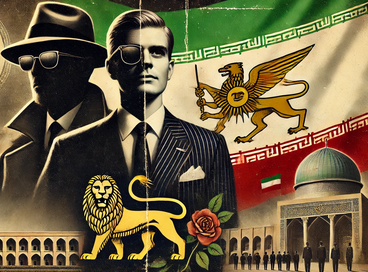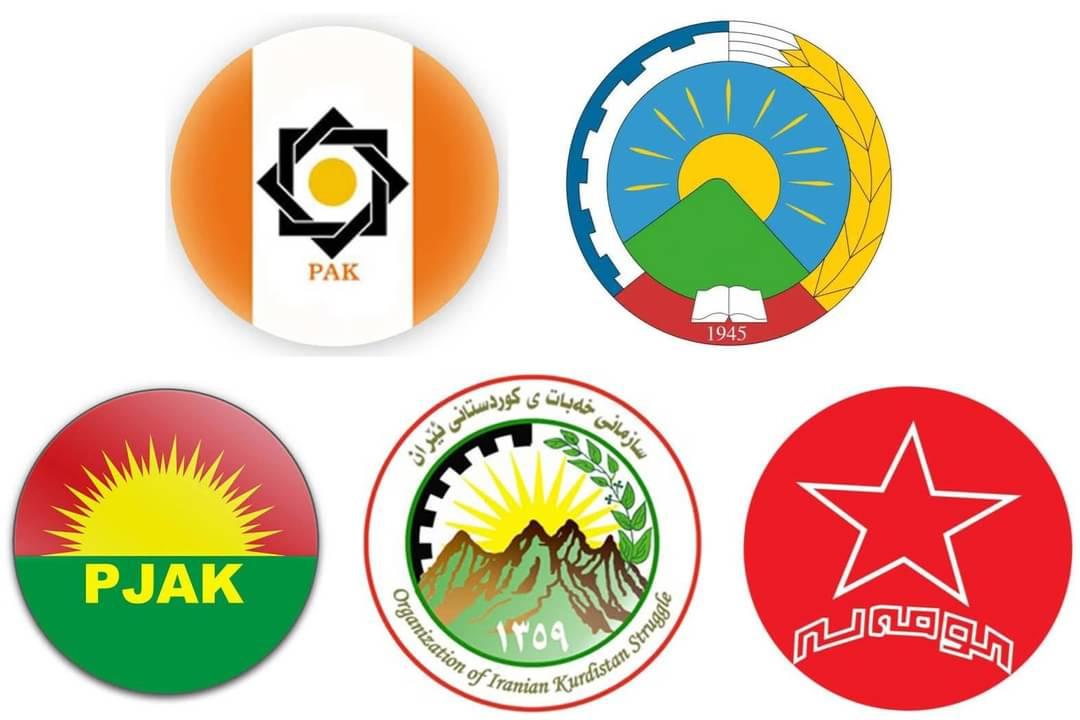
An Imagination for a Daring Declaration; a Nation without Borders A century ago, 67 words set a twelve-word dream – a declaration grew into the modern Israel.
Over 100 years later, another twelve-word statement could create the opportunity for a Kurdish nation—without the prison bars of pre-drawn borders. This isn’t a far-off expression, but a current opportunity filled with urge. A precedent exists; The Balfour Declaration said little about Israel’s borders, didn’t resolve other Middle East issues, and provoked certain failed dreams. Rather, it authorized a Jewish state’s possibility.
Reason enough to grant that same privilege to the Kurdish people, having shared history, roots, and language but none of the freedom across Turkey, Iran, Iraq and Syria1. Such response does not require predetermined borders and would grant Kurds hope, a chance to reify it, as did Israel, will always provide a better answer than none. Historical examples prove it.
A post-WWI Treaty of Sèvres first assured Kurds statehood2, following by a thwarting by presidential elections and the Treaty of Lausanne in 1922. Yet, the precedent persists, showing the globe once considered has a point. And before that, 19 century Alash Autonomy in Kazakhstan as a borderless idea of self-governance among Turkic peoples that fostered the current Kazakhstan3. Respected concepts restated across history make another truth be spoken: for the betterment of humanity, it is better to say something than nothing, even if the solid boundaries are not to be painted.
The Kurdish Spirit: Ready for the Moment
The Kurds are not new to self-governance — and they are demonstrating that they can not only survive. In Iraqi Kurdistan, they have created a semiautonomous region with elections, schools and a thriving oil economy, despite being surrounded by chaos. In Rojava, Syria, Kurdish-led forces have managed to construct a democratic experiment that incorporates social equality and solidarity, even in the face of imminent threats. These are not only territories but a living proof that the Kurds are more than ready for the next step. Such a declaration wouldn’t be the creation of their nation out of whole cloth — it would be a recognition of what’s already forming.
A Flexible Route Through Geopolitical Roadblocks
However, neighboring countries such as Turkey, Iraq, Iran and Syria may chafe at the notion of an independent Kurdish state and the loss of territory or influence it implies. But here’s the brilliance of a borderless declaration: It doesn’t actually divide up territory immediately. Instead, it paves the way for negotiation, creating room for all parties to strike a balance. Consider the 1998 Good Friday Agreement in Northern Ireland — it didn’t draw new borders, but it created a framework for peace that holds to this day. So could a Kurdish declaration, loosening pressure through negotiation instead of division.
The world has a role, too. The United Nations Charter makes a big deal of self-determination as a universal human right, and institutions such as the U.N. could facilitate this process in an impartial manner. Just look at East Timor: In 1999, following a United Nations-backed referendum, it became independent without triggering perpetual war. A Kurdish declaration could rely on global balm to keep things placid and peaceful.
Economic Promise, Not Peril
Cynics could predict instability, but a Kurdish nation could prove to be an economic windfall. Already, the Kurdish region of Iraq pumps oil and does business with the world — imagine the potential unleashed across a unified Kurdish state. A secure, self-governing Kurdish area could attract investment, develop infrastructure and enhance trade corridors between Europe and Asia. Israel’s emergence took a desert and transformed it into a high tech powerhouse; a homeland for the Kurds could do the same to rugged mountains, and then some bringing the whole region up in the process.
A Landmark of Culture to Be Celebrated
This transcends politics and economics — this is about identity. The rich traditions of the Kurds — their Newroz festivals, poetry and music — are ripe for a stage, not a jackboot. A declaration would allow that culture to shine in a global world, a la Ireland after gaining its independence. It isn’t about land; it is about freedom for a people to be loud — loud and proud.
Leaning In: Stateless Bodies Talking Back and Forth
The Kurds would not be the first to become a stateless people. The Sámi of Scandinavia have no single country, but they have political clout in a borderless parliament that is institutionally recognized by Norway, Sweden and Finland. After all the European Union started as an amorphous notion of unity, not a fixed map, and then it became a global force. These cases demonstrate that nationhood can start with a vision, not a fence —and the Kurds could be next.
A Legal Green Light
This dream is supported by international law. The United Nations’ 1966 International Covenant on Civil and Political Rights states that “all peoples have the right of self-determination.” The Kurds, with their unique identity and millions-strong population, were the perfect people for the cause. A declaration would not violate rules — it would uphold them, providing the Kurds the voice they need to ensure the world cannot ignore them.
A Bright Horizon Ahead
Imagine just: a leader rises up, declares something, and history changes. Far from any forced borders, nowhere near a rush to conflict — just a sure nod to a people’s right to exist.” The Kurds, as the Jewish people did before them, have waited long enough. Call this their Balfour moment — a spark to guide them toward peace, prosperity and pride. One daring stroke can change the game, as it did in 1917.
Let’s make it happen.