Pejvak Kokabian
Introduction
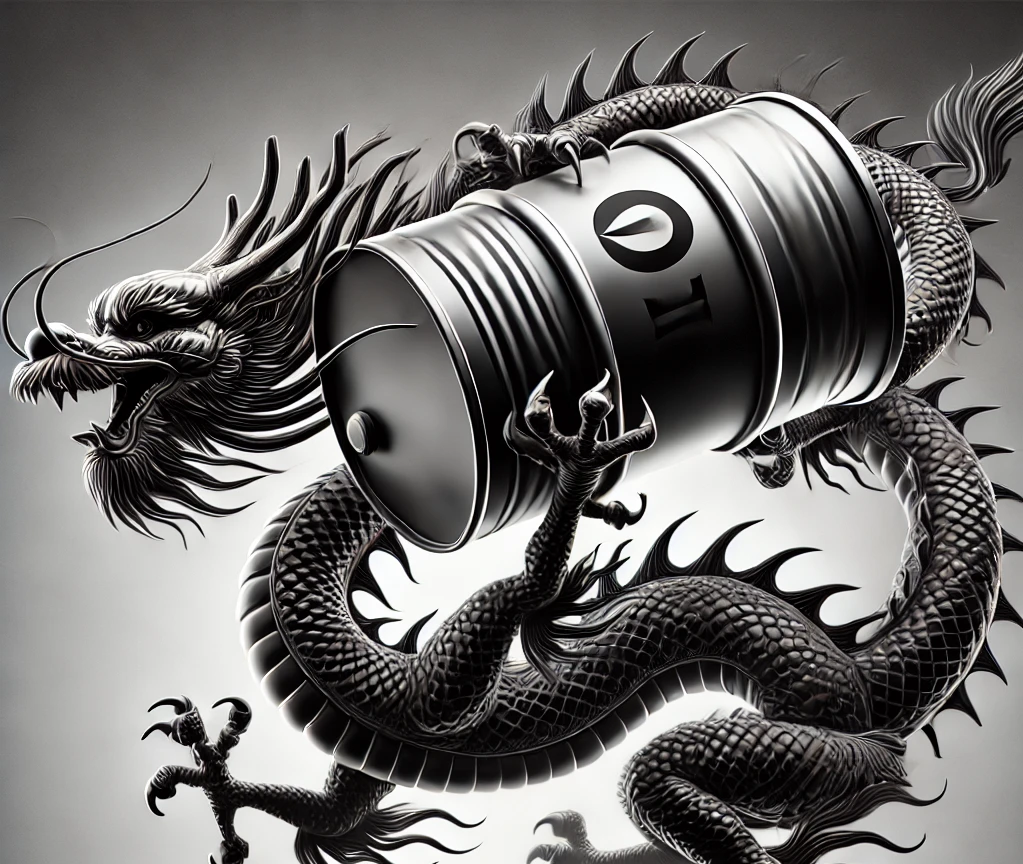
Evolving geopolitical and economic dynamics continue to shift the balance of power in today’s world. Right at the very heart of these shifts has been an interestingly complex three-way dynamic between China, Iran, and the United States. There has been growth in Chinese prosperity as China has risen to global dominance in manufacturing, in great measure due to access to very affordable energy, much of which came from Iran. New data suggests that China currently imports some 1.4 million barrels of Iranian oil per day-a relationship of significant scope. Meanwhile, the economic policies of Iran-especially in selling hugely subsidized oil to strategic allies-have caused ripples that disturb the free market and fairness in economies around the world. While these are the emerging trends, the overwhelming need is for the United States to respond in time and with efficiency to secure its strategic and economic interests.
This article will explore the interlinking roles for Iran and China, besides other world players such as Russia, and the possible stratagems which the U.S. can use to counter such eventualities. It further analyzes the global implications of these and their eventual impact on economic and political stability given the recent geopolitical shifting and reordering in international trade patterns.
The Evolution of Sino-Iranian Relations
The relations between China and Iran have deepened in the last few years. According to reports, China has placed itself shrewdly to buy oil from highly-sanctioned Iran at lower prices, thus forming a symbiotic relationship seen to thwart Western interests. This has gone up to a stage where the countries are working out both alternative systems of payment as well as alternative ways of trade other than international sanctions.
China’s Gain: Reaping from Iran’s Oil
Underpinning China’s meteoric rise in the global manufacturing league has been an ability to secure cheap, reliable sources of energy. Preeminent among these is Iranian oil, a critical enabler of China’s industrial economy. Iran’s willingness to sell its oil at below-market prices, often in defiance of international sanctions, has allowed China to maintain exceptionally low production costs.
This has given the Chinese manufacturers an outsized competitive edge in the global marketplace, especially since China has become the world’s manufacturing powerhouse.
Economic and Strategic Consequences
Economic disparities: Having come to the aid of Iran’s subsidized oil, China had placed itself as a manufacturing power, thereby undercutting all Western industries and even those smaller economies which cannot compete with it.
But that of Strategic Interdependence: China becomes further entwined by reasons of Iranian oil, heaves along an axis of influence against which it is troublesome to contain the U.S.’s declared dual adversaries.
Global Market Distortions: Artificially depressed energy costs will suppress the cost of Iran’s oil and its consequence on world trade, wherein other countries will either absorb the increase in cost or yield market share.
Market Manipulation: The strategic partnership between Iran and China has created an alternative market for sanctioned oil, with payments increasingly denominated in Chinese currency.
Halting the flow of cheap Iranian oil to China would be a critical step in restoring fairness to global markets and reducing China’s strategic leverage.
Strategic Aims of a Military Operation
Cutting China’s Energy Lifeline: The military intervention would disrupt Iran’s oil exports, hitting directly at China’s energy supply chain and crippling its manufacturing base.
Regional Realignment: This would weaken Iran’s clout in the Middle East; such a development acts in favor of American key allies such as Israel and Saudi Arabia, thus crippling its supporting of militancy and running of destabilizing activities in this respect.
Resource Control: Securing access to Iran’s newly discovered lithium deposits may grant the U.S. some bargaining chips in a market that is growing with electric cars and technology.
Oil Price Manipulation: Disrupting Iranian oil exports would likely cause global oil prices to spike over to $130 per barrel, benefiting U.S. domestic producers and allies like Saudi Arabia and not so much ally Russia, while pressuring energy-dependent economies like China and Europe.
The Need for a Swift Resolution
A long war, on the other hand, would be disastrous. It would siphon off U.S. resources, further destabilize the region, and embolden such adversaries as Russia. Proponents say a quick outcome, three to six months at most, would be necessary to avoid setbacks from long military involvement in Iraq and Afghanistan.
The Global Economic Landscape
These strategic considerations are compounded under the present economic context: the U.S. debt is now $35.5 trillion as of September 2024, with the whole amount due to be issued as interest-only, standing at $1126.5 billion F.Y. 2024. No less than this fiscal reality urges the necessity of bold acting in view of protection issues for U.S. economic concerns and the stability of Global Finance.
Calculated Response from Russia
The response of Russia to a U.S. attack on Iran would be guided by its own economic and geopolitical interests. Though there are strategic partnerships between Russia and Iran, Moscow might look at such conflict as an opportunity rather than a threat.
Higher Oil Prices: A conflict in the Gulf would disrupt global oil supplies, driving prices up. This, in turn, would be to Russia’s benefit through higher revenues and an easing of domestic economic pressures, being an exporter of oil.
Relief on Ukraine: A U.S.-Israel military campaign in the Middle East would distract the West, especially the United States and other NATO members, from their efforts in Ukraine, thus offering a strategic breather for Russia in its ongoing conflict with Kiev.
Market Opportunities: Any disruption of Iranian oil supplies to China might create opportunities for Russia to expand its energy exports to Asian markets.
Although Russia might provide some rhetorical support for Iran, actions directly against a U.S.-led operation are less plausible as higher oil prices and Western distraction would play neatly into its hands.
The Manufacturing Shift and Mexico’s Role
These challenges have made the U.S. start strengthening its regional manufacturing capabilities. Recent reports say that Mexico has become an important partner in this strategy, offering an affordable and logistically streamlined alternative to Chinese manufacturing. This may be the long-term solution to reducing dependency on Chinese manufacturing capacity.
Any U.S. military intervention in Iran will hold significant economic consequences internationally and domestically, creating both winners and losers.
The Losers
Europe and the British Economy: Energy-dependent European countries would be severely disrupted on account of the higher price for oil, which would further worsen the current deteriorating economic situations. The British pound and the Euro would weaken with high surging energy costs. Asian Economies: Most Asian countries, reliant on imported oil, would be under economic stress, further complicating their ongoing recovery from post-pandemic challenges. China, the prime beneficiary of Iranian oil, will be the biggest loser. Energy disruptions will lead to higher production costs, taking down its manufacturing dominance and growth. The Winners U.S. Oil Producers: The higher price of oil will lift revenues for American companies, which will strengthen the US economy. Russia: Increased oil revenues would also be a lifeline for the ailing Russian economy, cushioning it from pressure exerted by Western sanctions and Russia’s war in Ukraine. In the coming years, Mexico might be in a good place for accelerated growth and increased foreign investment as an alternative destination for manufacturing from China. To preserve global economic order and contain China’s growing influence, the U.S. will need to assume some of the causes of these imbalances. Standing tough against Iran to end its subsidized oil exports is part of what it will take to undermine China’s illicit competitive edges in world manufacturing. Similarly, deeper regional relationships-especially with Mexico-and a reevaluation of economic dependencies could help rebalance an increasingly volatile world. It heads a road that requires bold but calculated steps: balancing short-term gains with longer-term stability. The competitive and conflicting nature of the world will indeed demand resolute leadership since such complex challenges will necessarily require making choices with always-a-present concern for considerable fiscal and strategic consequences of large-scale military intervention.
References:
https://www.cnbc.com/2023/03/06/iran-says-its-discovered-worlds-second-largest-lithium-deposit.html
https://www.washingtonpost.com/world/2024/10/25/china-iran-middle-east-conflict