Behind the Scenes of Rampant Executions and the Circus of the Anti-Penalty Campaign
What lies behind all these rampant executions, arrests, the killing of detainees and prisoners, and the program of the Revolutionary Guard, reformists, and their coordination with the Pahlavi faction in the anti-death penalty campaign?
In recent months and over the past year, the Iranian government has extensively engaged in the arrest and detention of youths and activists from various groups, particularly from non-centralized populations such as the Baluch, Kurds, and Arabs. A form of hostage-taking behavior, previously directed toward foreign nationals, has intensified domestically, as if the Kurdish, Baluch, Arab, and other social activists were citizens of another country.
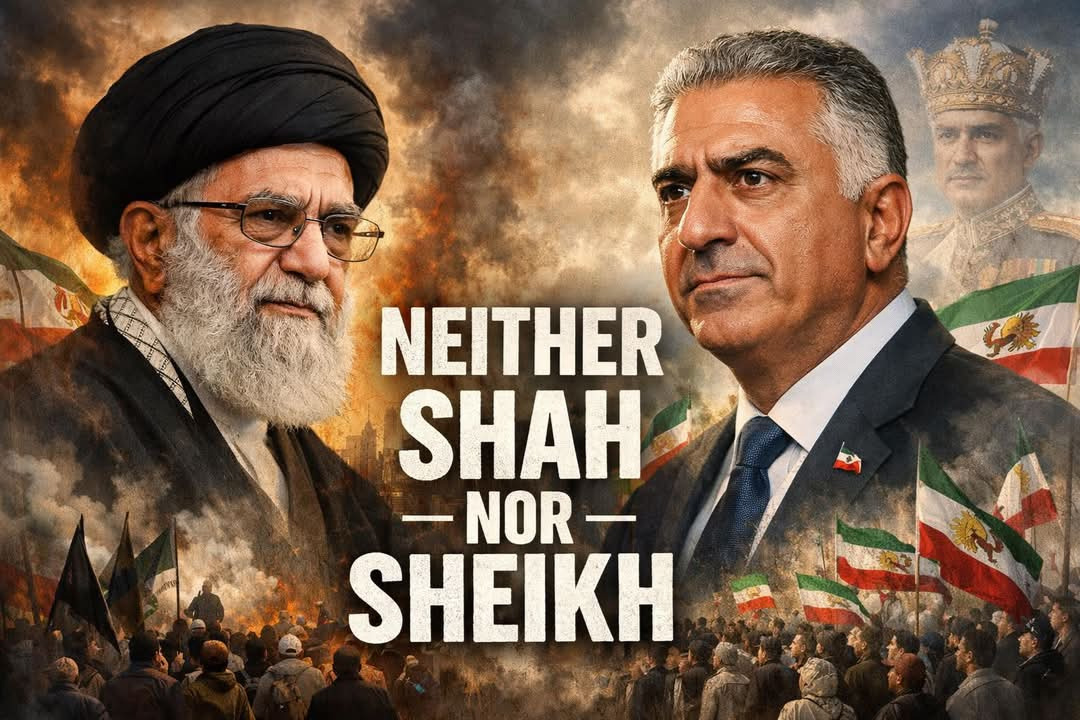
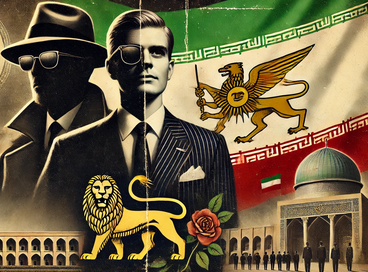
In the recent wave of arrests and executions, a clear trend and pattern can be observed, suggesting that a specific goal is being pursued. This wave of violations and massacres will undoubtedly have consequences in the future, for which it seems the perpetrators and orchestrators have scripted a scenario. In reality, the horrific massacre of prisoners and detainees under baseless pretexts is a deliberate attempt to tarnish and demonize executions, setting the stage for a future escape plan after the collapse of the current Iranian government system. The scenario is designed so that, at the expense of Kurdish and non-Persian youths, the issue of execution becomes so abhorrent and dark that in the next system, anyone calling for the execution of intelligence agents, Revolutionary Guards, or collaborators (jash) will face a formidable wall of moral opposition to the death penalty and real punishment. Visits by Narges Mohammadi, Nourizad, and other centralist figures to the homes and families of martyrs such as Dayeh Sharifeh, the families of Jina’s martyrs, and other victims of killings align with this polished fantasy and the anti-death penalty campaign (most online campaigns and petitions are launched by anonymous individuals). The reason for the coordination between the Revolutionary Guard, internal security forces, and the Pahlavi faction is that, at the height of Rafsanjani’s power (former president and close in-circle of founders of IS of Iran), contact and coordination were established with the Pahlavi faction and monarchists (refer to the negotiations between Rafsanjani’s son and Nikahang Kowsar). The Pahlavi faction was designated as a tool to ensure that, for Iran to remain under the control of the current rulers and Persians, the security apparatus and its resources must remain intact during a systemic transition from theocratic rule to monarchy. The connection between internal system actors and monarchist forces was so blatant and clumsy that even news outlets and former U.S. Secretary of State Mike Pompeo commented on it.
The program centered around the Pahlavi faction aims, under the grandiose banner of the anti-death penalty campaign, to effectively divide Iran into two parts: one part (essentially the non-Persian territories where horrific crimes have been committed) and a Persian-dominated part where the punishment of the regime’s thieves and criminals is overlooked.
Thus, this lawless and rampant killing serves no purpose other than aligning the next system to ban punishment and grant immunity to the perpetrators of crimes under a legal provision stating that they were “excused agents.”
According to international law, crimes are prosecutable, transferable, and reviewable in the courts and tribunals of the legal jurisdiction where they were committed.
In such events, the mercenaries, murderers, and criminals of the Iranian government will flee to the Persian-dominated region, where the death penalty has been banned. Let us not forget that some time ago, regime officials themselves proposed the independence of Qom province, which reveals the inner intent of criminals to escape to an inaccessible geography.
The criminal team of intelligence and the Revolutionary Guard has gone so far that, as Shadi Amin stated in a (video), the Pahlavi faction, in collaboration with security elements, has attempted to form a government-in-exile under the name of the prince’s team. All this fabrication of hope and government-building is aimed at evading punishment and staging a deceptive, superficial transfer of power to another figure.
Moreover, former members of the intelligence service will likely attempt to merge into the new system for several reasons. First, historical precedent demonstrates that intelligence operatives often seek to preserve their influence during regime transitions. For instance, after the fall of the Soviet Union, many ex-KGB agents integrated into Russia’s emerging political and economic structures, leveraging their skills and networks to maintain power (Andrew & Mitrokhin, 2005). Similarly, Iranian intelligence operatives, with their extensive knowledge of surveillance and coercion, could position themselves as indispensable to a new regime, especially one seeking stability amid chaos. Second, the intelligence apparatus has cultivated deep ties with various factions, including monarchists, over decades, as evidenced by their alleged coordination with the Pahlavi faction (Kowsar, 2020). This pre-existing network provides a pathway for reintegration, ensuring their survival and relevance in a post-theocratic system. Third, the anti-death penalty campaign, while ostensibly humanitarian, creates a legal and moral shield for these agents. By framing executions as universally unethical, they can argue for amnesty, claiming their actions were mandated by the state, a tactic observed in post-apartheid South Africa where security personnel sought protection under reconciliation frameworks (Truth and Reconciliation Commission, 1998).
Political Analyst, Manouk Khodabakhshian
Monarchy supporters, with the help of security forces, are striving to keep the Basij and intelligence agents in power, preventing their punishment or removal. One of the trusted members of high clerics in today Iran, Mehdi Nasiri (backed by clerical authorities), the Revolutionary Guard, and the Pahlavi faction are in complete coordination.
However, the truth is that the entire Iranian nation-state, its internal elements, and the monarchist forces supporting the Revolutionary Guard and the system are responsible for the crimes committed in Kurdistan, just as the German nation was held accountable for the Nazi crimes against the Jewish people.
Establishing courts of conscience and action, which morally judge tyranny, colonialism, and crime while ensuring that criminals face the consequences of their actions, is an undeniable and inviolable principle.
References
- Andrew, C., & Mitrokhin, V. (2005). The Mitrokhin Archive: The KGB in Europe and the West. Basic Books.
- Kowsar, N. (2020). “Revelations of Negotiations Between Rafsanjani’s Son and Monarchist Factions.” [https://nkowsar.substack.com/p/the-iranian-coalitions-of-oneor-none].
- Negotiations between Rafsanjani’s son and Nikahang Kowsar (https://nkowsar.substack.com/p/the-princes-entourage-a-leadership).
- Statements by Mike Pompeo, former U.S. Secretary of State.
- Truth and Reconciliation Commission. (1998). Truth and Reconciliation Commission of South Africa Report. Government of South Africa.
- Video statement by Shadi Amin (https://www.youtube.com/watch?v=-dMGnUM0bdQ).