Mohim Baluch (Sarkhosh)
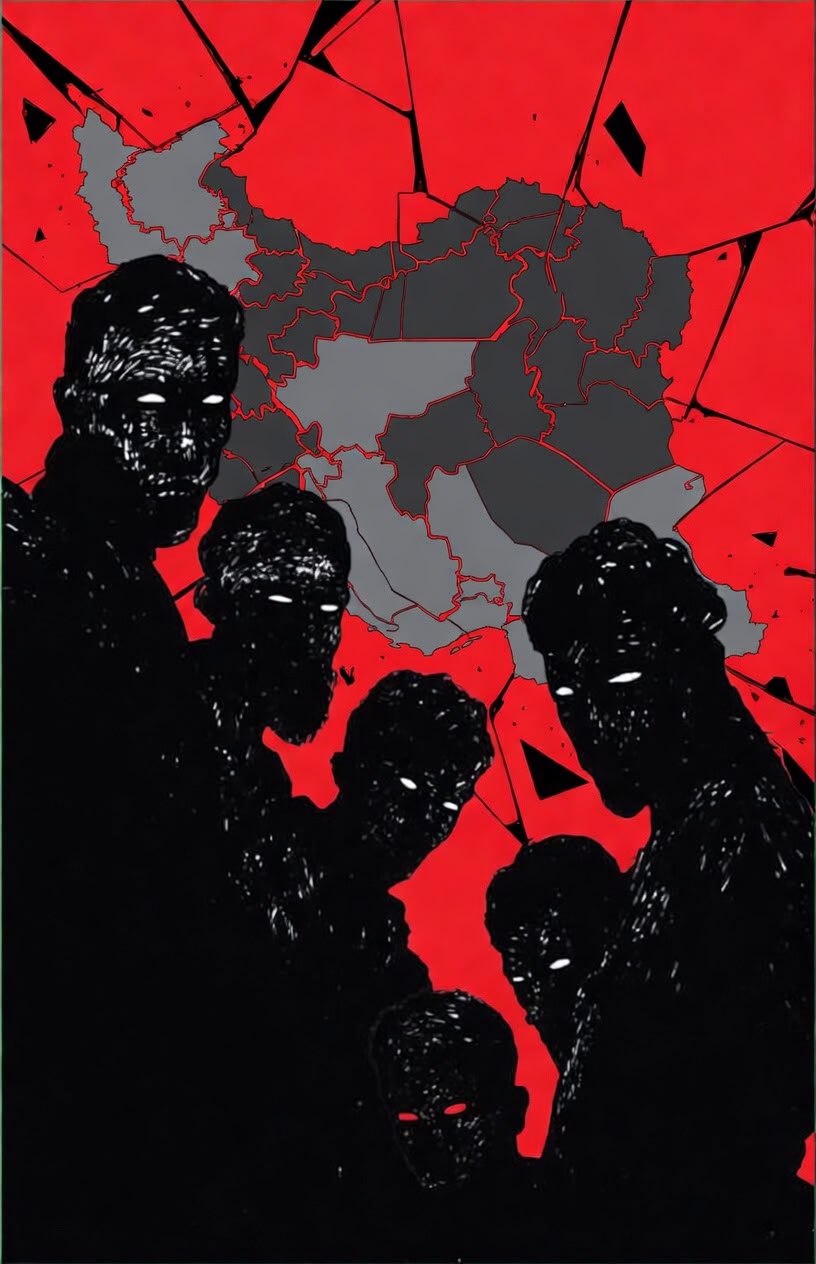
Iran’s future hangs by a thread. The choice is no longer abstract or distant. It is clear, urgent, and unavoidable: either the nations within its borders gain the right to self-determination—or the country will inevitably collapse.
For more than a century, history has repeated itself with brutal precision. The Constitutional Revolution promised freedom and justice. The 1979 Revolution promised equality and democracy. Yet each time the result was the same: promises were broken, power was monopolized in Tehran, one language was imposed on all, one “national” identity was dictated, and non-Persian nations—who make up the majority of Iran’s population—were reduced to second-class citizens in their own lands. Instead of partnership, they were given repression. Instead of equality, they were handed internal colonialism.
This cycle must not—and cannot—be repeated.
The Red Lines of Non-Persian Nations
Non-Persian nations must now state their demands clearly and without compromise. These are not negotiable, and they cannot be postponed to some uncertain future. They are the minimum conditions for justice and coexistence:
• A genuinely decentralized system: a confederation of nations, or at least a federal structure based on historic, linguistic, and cultural boundaries, with ironclad guarantees.
• Full equality among all nations, without exceptions and without hidden hierarchies.
• Mother-tongue recognition: the right to education, media, and administration in our own languages.
• The unconditional right to self-determination, including the possibility of independence if nations freely and democratically choose it in referendums.
• Written and binding guarantees in every political agreement or coalition—not verbal promises, not vague gestures toward an unknown future, and not postponement of all issues until after the fall of the current regime or the meeting of some future Constituent Assembly.
Anything less is deception. Anything less is simply the continuation of the same old project: domination under the mask of democracy.
The Trap of the Constituent Assembly
Persian-centric parties endlessly repeat one phrase: “Everything will be decided later, by the Constituent Assembly.”
We know this game. We have seen it before. A Constituent Assembly without structural guarantees for equality is not democracy—it is a trap. It is a stage where the numerical majority silences oppressed nations. It is the mask of legitimacy placed over the same old project of centralism.
History gives us clear warnings. The parliament of the Constitutional Revolution, meant to symbolize freedom, became dominated by one nation and one language. In 1979, the Assembly of Experts replaced a true Constituent Assembly, allowing clerical and centralist elites to strip away every trace of national rights from the constitution. Both times, non-Persian nations were promised their rights “later.” But “later” never came. “Later” meant betrayal. “Later” meant erasure.
To say “wait for the Constituent Assembly” is to say: give up your rights today, trust us with your future, and accept your disappearance tomorrow. This is nothing but political fraud.
The Demographic Illusion
Another danger lies in numbers. Persians, together with assimilated minorities, form the largest demographic bloc in Iran. If sheer majority voting is taken as the measure of legitimacy, the voices of oppressed nations will once again be crushed under the weight of numbers. Democracy without protections for national minorities is not democracy—it is tyranny of the majority. It is a tool of domination disguised as popular will.
This is why non-Persian nations cannot trust in abstract promises of “free elections” or “equal participation” within a centralized system. Without structural guarantees—federalism, confederation, or explicit recognition of the multinational reality—elections will only reproduce the same old injustice, this time wrapped in democratic language.
The False Promise of Unity
We must say this with absolute clarity: “unity” that denies equality is not unity—it is oppression. When Persian-centric parties speak of unity without acknowledging the multinational nature of Iran, what they mean is submission. They mean assimilation. They mean internal colonialism, enforced by law and by force.
Real unity is only possible when all nations join freely and as equals. That requires binding agreements, written contracts, and structural guarantees. Unity built on trust in vague promises has been tested for over a century—and it has always ended in betrayal.
The Road Ahead
The way forward is clear. For non-Persian nations, there can be no return to illusions. We will not take part in political projects that refuse to recognize our rights. We will not accept verbal promises that history has already proven false. We will not sell our future again for another round of “maybe later.”
The choice is simple and inescapable:
• Recognize the right to self-determination, guarantee federal or confederal equality, and respect linguistic and cultural rights—and build a future of free and just coexistence.
• Or deny these rights, cling to centralism, and face the inevitable collapse of Iran.
The age of deception is over. The age of written commitments, binding guarantees, and multinational recognition has begun. If these demands are ignored, the responsibility for Iran’s fragmentation will rest entirely with those who refused to listen.
Today, the nations of Iran are not asking. They are declaring: self-determination or collapse. There is no middle ground.